
Ethical Beauty Values That Shape Your Makeup Choices


Ethical beauty is defined as the practice of choosing makeup products that are cruelty-free, vegan, sustainably sourced, and transparently formulated to reflect both social and environmental responsibility. Your ethical beauty values makeup choices in ways that go far beyond the label on the front of the tube. Right now, 78% of beauty brands have no independent certification to prove their products are not tested on animals. That number is striking. It means the majority of what lines store shelves makes claims with nothing to back them up. Certifications like Leaping Bunny, PETA Beauty Without Bunnies, and The Vegan Society exist precisely to close that gap. This guide walks you through how to read those certifications, evaluate ingredients, and build a makeup routine that genuinely reflects what you care about.
What certifications and labels tell you about ethical makeup choices
Not all ethical labels carry the same weight. A brand printing “cruelty-free” on its packaging without third-party verification is making a self-declared claim, and self-declared claims are unverifiable. The industry standard for cruelty-free certification is Leaping Bunny, which requires brands to monitor their entire supply chain, including every ingredient manufacturer. That supply chain requirement is what separates Leaping Bunny from looser programs. PETA’s Beauty Without Bunnies is another widely recognized program, though it relies more on brand pledges than supply chain audits.
Cruelty-free and vegan are not the same thing. A product can be cruelty-free but not vegan if it contains animal-derived ingredients like beeswax or lanolin but was never tested on animals. Vegan certification, issued by organizations like The Vegan Society, confirms that no animal-derived ingredients appear in the formula. Only 9% of assessed beauty brands hold third-party vegan certification. That low number shows how rare genuine vegan transparency still is across the industry.
Here is what to look for when evaluating a brand’s ethical claims:
- Leaping Bunny seal: Confirms no animal testing at any stage of production, including ingredient suppliers.
- PETA Beauty Without Bunnies: Signals a brand pledge against animal testing, with varying levels of verification.
- Vegan Society trademark: Guarantees no animal-derived ingredients and no animal testing.
- EWG Verified: Focuses on ingredient safety and transparency, not animal testing specifically.
- “Clean” or “natural” labels: These terms are unregulated and carry no legal definition. They tell you nothing on their own.
Pro Tip: Search the Leaping Bunny database directly at leapingbunny.org before buying. A brand’s name either appears there or it does not. No amount of green packaging changes that fact.
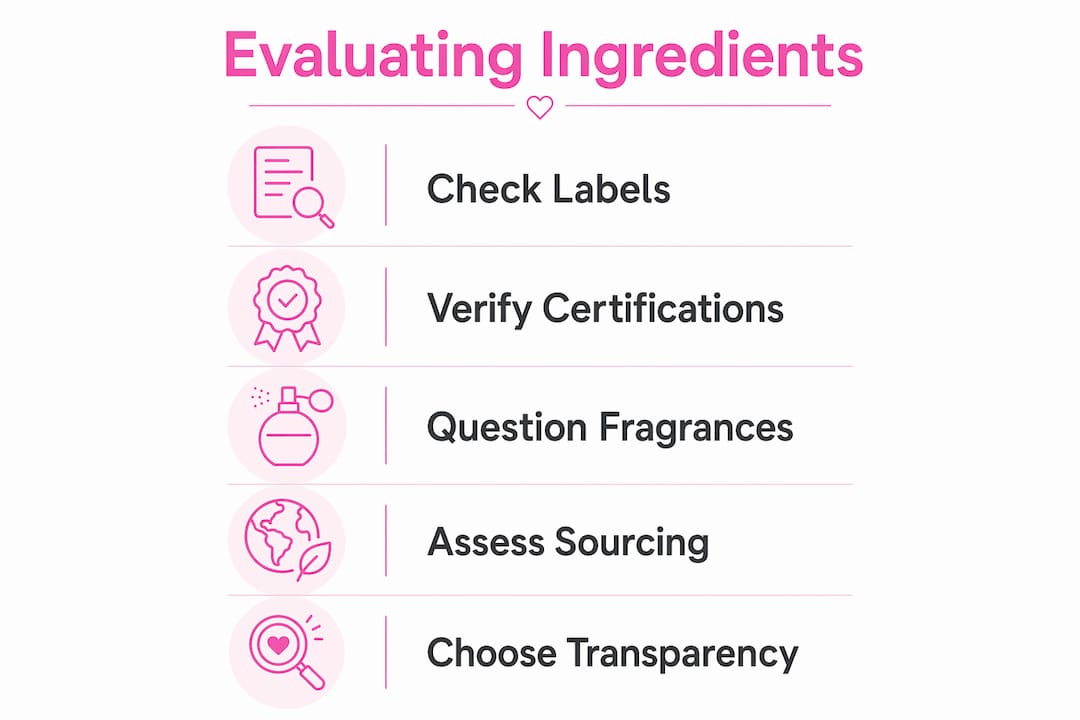
How to evaluate makeup ingredients for ethical and sustainable choices

Reading an ingredient list is one of the most direct ways to verify a product’s ethics. The INCI (International Nomenclature of Cosmetic Ingredients) list on every product is the place to start. 40% of beauty brands disclose the use of animal-derived ingredients in their formulas. That means a significant portion of the market contains ingredients that conflict with vegan values, even when the front label looks clean.
The most common animal-derived ingredients to watch for include:
- Carmine (CI 75470): A red pigment made from crushed cochineal insects, used widely in lipsticks and blushes.
- Beeswax (Cera Alba): Found in lip balms, mascaras, and cream products as a thickener.
- Lanolin: Derived from sheep’s wool grease, used in moisturizing formulas.
- Gelatin: An animal protein used occasionally as a film-forming agent.
- Squalane: Can come from shark liver oil, though plant-based versions from sugarcane or olives now exist.
Sustainability goes beyond animal ingredients. Ingredient sourcing matters too. Fair trade certification on ingredients like shea butter or cocoa butter signals that the farmers who grew those materials were paid fairly. Organic certification reduces pesticide exposure in the supply chain. Fragrance listed as a single ingredient is a red flag because it can mask dozens of undisclosed chemicals. Brands that disclose their fragrance components or use certified fragrance-free formulas show a higher level of transparency.
Pro Tip: When a brand lists “fragrance” or “parfum” without further detail, email their customer service and ask for the full fragrance breakdown. Ethical brands answer that question. Brands with something to hide usually do not.
How to transition to ethical makeup without starting over
Most people fail their ethical switch by trying to replace everything at once. The most effective approach is to prioritize one or two core values first, such as cruelty-free status or sustainable packaging, and build from there. Decision fatigue is real. Trying to evaluate every product against five criteria simultaneously leads to paralysis and abandoned carts.
Start with your highest-exposure products. Foundations and moisturizers stay on your skin the longest and have the greatest potential impact on your overall ingredient exposure. Replacing these first makes the most practical sense. A cruelty-free, true-to-tone foundation like My TFace – Lite As Air Liquid Foundation, for example, addresses both performance and ethics without asking you to compromise on shade range for melanin-rich skin.
Do not throw away the products you already own. Finishing existing products before replacing them avoids unnecessary waste and respects the resources already used to make them. That approach is both sustainable and economical. Write down your personal ethical criteria before you shop again. A simple list with two or three non-negotiables, such as “Leaping Bunny certified” and “no carmine,” gives you a filter that makes every future purchase faster and clearer.
Consulting resources like Good On You’s brand ratings or the Mytubescosmetics blog helps you stay current on which brands meet which standards. The ethical beauty space moves quickly, and certifications can be added or removed as brands change ownership or suppliers.
How to spot greenwashing in ethical makeup brands
Greenwashing is defined as the practice of making misleading environmental or ethical claims to attract conscious consumers without substantive evidence. It is prevalent in beauty because terms like “clean,” “natural,” “eco-friendly,” and “conscious” carry no legal definition in the United States. A brand can print any of those words on a product without meeting a single verifiable standard.
Brands without third-party certifications or full ingredient transparency are almost certainly making claims they cannot prove. Demanding evidence before you buy is not cynicism. It is the only rational response to an unregulated market.
Signs of greenwashing to watch for include:
- Vague language: “Made with natural ingredients” without specifying which ones or what percentage.
- No certification seal: A brand claiming to be cruelty-free with no Leaping Bunny or PETA listing.
- Green packaging with no substance: Recyclable packaging is good, but it does not make a formula ethical.
- Buzzword overload: Terms like “conscious,” “pure,” or “clean” stacked together with no certification to anchor them.
- Self-declared vegan: A brand calling itself vegan without The Vegan Society trademark or equivalent third-party verification.
The “clean” beauty label is one of the most misused terms in the industry. EWG Verified is a more reliable indicator of ingredient safety because it requires brands to meet specific criteria for ingredient transparency and safety. Greenwashing exploits the gap between consumer demand and regulatory oversight. The best defense is a short list of required certifications and the habit of checking registries directly.
Key Takeaways
Ethical makeup choices require verified certifications, ingredient transparency, and a focused transition strategy rather than a complete overnight overhaul.
| Point | Details |
|---|---|
| Certifications over claims | Only Leaping Bunny, PETA, and Vegan Society seals confirm ethical standards with independent verification. |
| Cruelty-free ≠ vegan | A product can avoid animal testing but still contain beeswax, carmine, or lanolin. |
| Start with high-exposure products | Replace foundations and moisturizers first since they stay on skin the longest. |
| Finish what you have | Using up existing products before replacing them reduces waste and supports sustainability. |
| Greenwashing is widespread | Unregulated terms like “clean” and “natural” require no proof; always check third-party registries. |
Why I think the “all or nothing” approach to ethical beauty is the wrong move
I have watched so many people get excited about ethical beauty, build a cart full of certified products, and then quietly go back to their old routine within a month. The reason is almost always the same. They tried to change everything at once and burned out when one product did not perform or one brand turned out to be harder to find than expected.
My honest approach is to pick two values and hold them firmly. For me, Leaping Bunny certification and no carmine are non-negotiable. Everything else is a bonus. That focus makes shopping fast and keeps me consistent. When I find a product that also ticks the vegan box or uses recycled packaging, that feels like a win rather than a baseline requirement.
Performance matters too, and I will not pretend otherwise. A foundation that oxidizes or a lipstick that transfers every hour does not serve anyone, no matter how many certifications it holds. The good news is that ethical brands have gotten genuinely good at formulation. Mytubescosmetics builds bold, no-transfer lipstick — My TLips – Velvet Kiss Matte Lipstick — and true-to-tone foundation specifically for melanin-rich skin, and those products hold up. You do not have to choose between your values and your look.
The other thing I have learned is that flexibility beats perfection. Your ethical criteria will evolve as you learn more. That is a feature, not a flaw.
— My
Mytubescosmetics: ethical makeup built for your skin
Mytubescosmetics creates cruelty-free makeup specifically formulated for melanin-rich skin, so you never have to choose between ethics and performance. Every product in the collection reflects a commitment to ingredient transparency and responsible sourcing.
The best-selling collection includes bold no-transfer lipsticks, true-to-tone foundations, and glow products that deliver real results. The matte lipstick range is cruelty-free and vegan, built to stay put through long days without fading or feathering. If you want to shop with confidence that your products match your values, Mytubescosmetics is a collection worth exploring. Not sure which shade is yours? The shade finder tool makes it easy to get it right the first time.
FAQ
What does cruelty-free actually mean in makeup?
Cruelty-free means no animal testing was conducted on the product or its ingredients at any stage of production. The most reliable confirmation is a Leaping Bunny or PETA Beauty Without Bunnies certification, not a self-declared label.
Is cruelty-free the same as vegan makeup?
No. Cruelty-free refers to animal testing, while vegan means the formula contains no animal-derived ingredients. A product can be cruelty-free but still contain beeswax, lanolin, or carmine.
How do I know if a brand is greenwashing?
Look for the absence of third-party certifications alongside vague terms like “clean,” “natural,” or “conscious.” Brands that are genuinely ethical list verifiable certifications and disclose their full ingredient sourcing.
Which products should I replace first when going ethical?
Start with foundations and moisturizers because they stay on skin the longest and represent the highest ingredient exposure. Replacing these first delivers the most meaningful impact on your routine.
What is the Leaping Bunny certification?
Leaping Bunny is the gold standard cruelty-free certification. It requires brands to monitor their entire supply chain, including ingredient suppliers, to confirm no animal testing occurs at any point.


